Jean wrote:
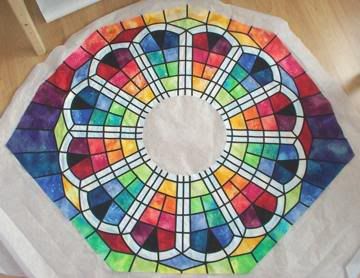
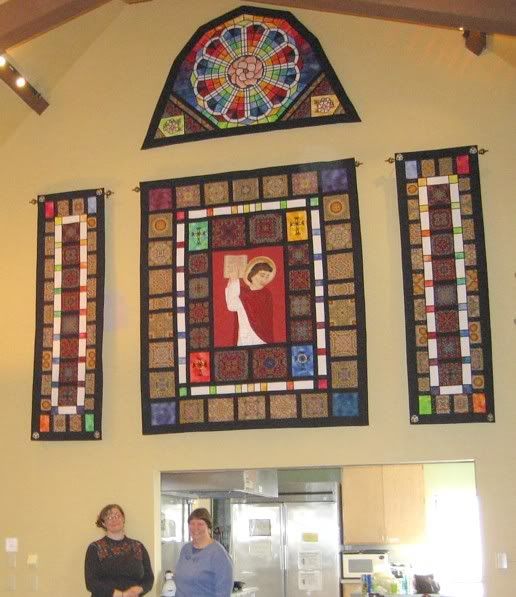
Hopefully, the quilts will be installed this Saturday, the 22nd. While the rose window quilt will be attached to a wooden frame with velcro and the frame permanently attached to the wall, this is an unusual installation to say the least. Still, if it's 14-18 feet up the wall, it probably won't be taken down weekly (or even annually) for cleaning.
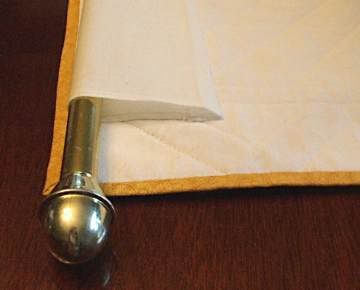
The standard way for a quilt to get "hung" is to hand sew a 4" wide open sleeve across the top, preferably down an inch or two from the very top. The picture here shows another quilt with a rod through the sleeve. The sleeve is sewn with a pleat at one edge so when mounted, the quilt will hang flat and not curl over the rod.
The size is standard for quilt shows, where the quilts are hung on wide wooden rods. The sleeve also protects the cloth of the quilt itself from stains or abrasion from the hanging rod.
In our installation, the two narrow lower quilts will have a standard sleeve, while the center larger quilt will have two sleeves with an opening between them to allow for the rod to be supported by a center support as well as at both sides. We did buy good, heavy ¾" rods, so they should not bend or bow with time.
Okay, what's this about security? Well, believe it or not, there are
quilt thieves. Hard to believe, isn't it? But some quilts are like art pieces - not simply a bunch of fabric and thread, any more than a painting is a piece of paper or canvas and paint. Color, design and workmanship determine the value of quilts, as well as age for antique quilts.
There is an entire quilt appraisal industry out there. An expert appraisal is needed for any insurance value beyond the replacement value of the materials.
Time doesn't count with routine insurance such as replacement house insurance or insurance when being shipped. Time only counts when it's part of an appraisal value.
People occasionally maliciously damage quilts. A few years back, a vendor at the International Quilt Festival in Houston, TX - one of the largest and most prestigious in the country - threw bleach at a quilt, which, needless to say, damaged it and the surrounding quilts quite a bit.
Why? He didn't like the naked woman portrayed on the quilt.
So what do quilters do about security? At one end is nothing - a completely anonymous quilt that says nothing about the quilt, the quilter or when or why it was created. At the opposite pole is the insertion of a grain-of-rice size microchip into the quilt, just like the ones inserted under the skin of pets in case they get lost. We haven't done that - yet - as it involves purchase, insertion and registration.
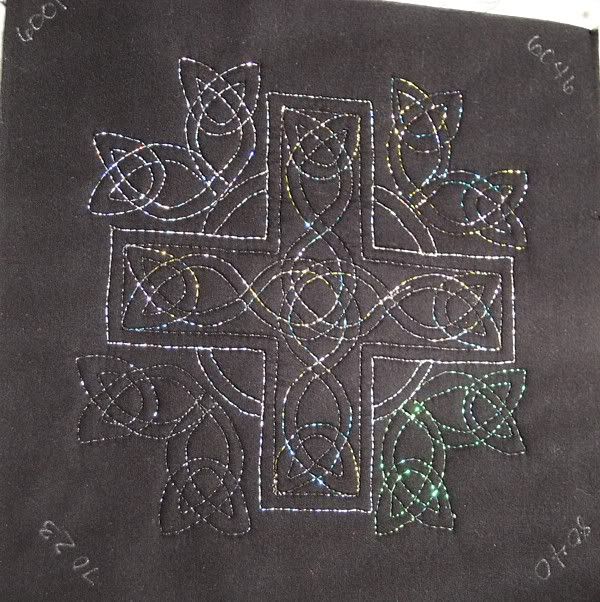
Labels are frequently attached to quilts and can contain a variety of information - the quilters' names, date of completion and perhaps the occasion. Labels should be sewn to the quilt and then quilted through to prevent unscrupulous people removing the label!
We chose two types of labels:
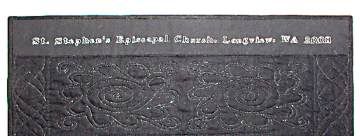
The stitched labels will be part of the quilt backings except for the larger rectangular quilt, which has a very artistic label done by Tracy on the front.
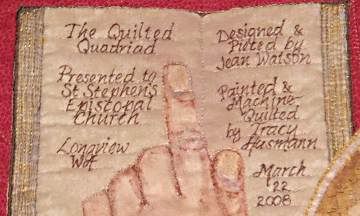
Ever wonder what St. Stephen is pointing to in the wood carving? Tracy has solved that mystery!
So our labels are integral parts of the quilts themselves, hard to remove but not as informative as the microchips. As each microchip costs $38, and I'm not sure if the registration costs anything, that may be a future security measure.
Just thought you'd want to know how we are trying to protect your investment.

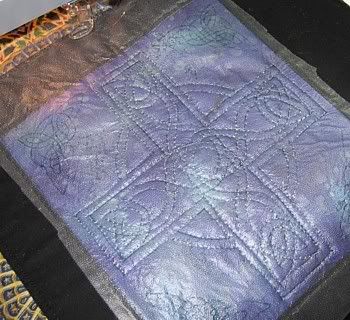
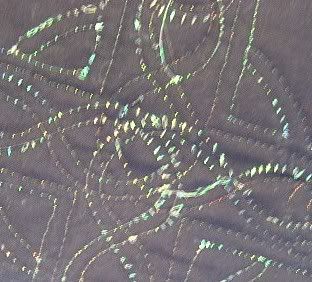
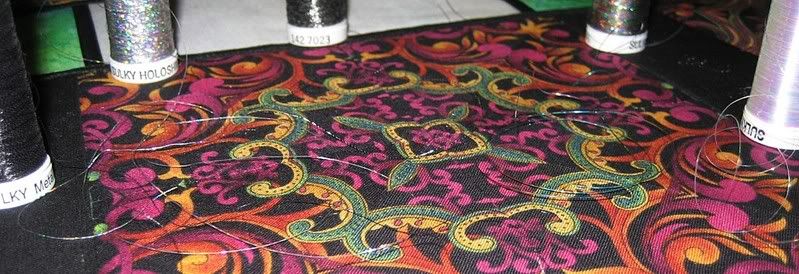
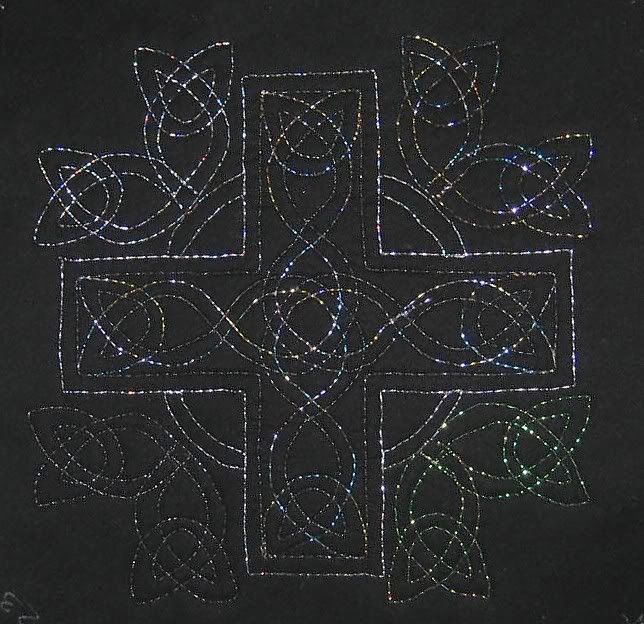
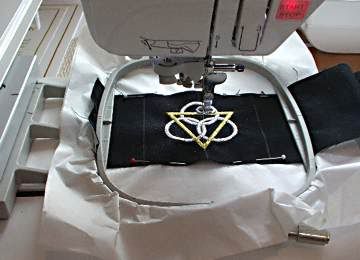 I love working with metallic thread - it looks so elegant, so I've been playing with design elements for the narrow quilt corners and the rose window corners.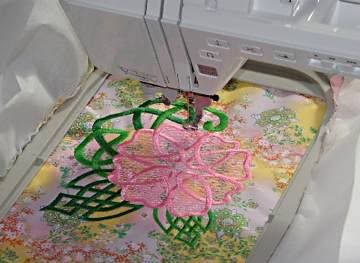
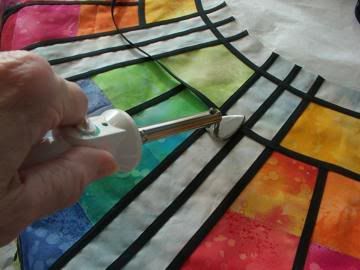 Hot dang! I finished the rose window leading. The little Clover iron was a must, as it had to fit in between the leading lines. I just left it on the entire time I was sewing down the leading so I could reattach loosened sections.